

Navantia UK showcases FSS progress and hybrid navy ambition to Director Naval Acquisition
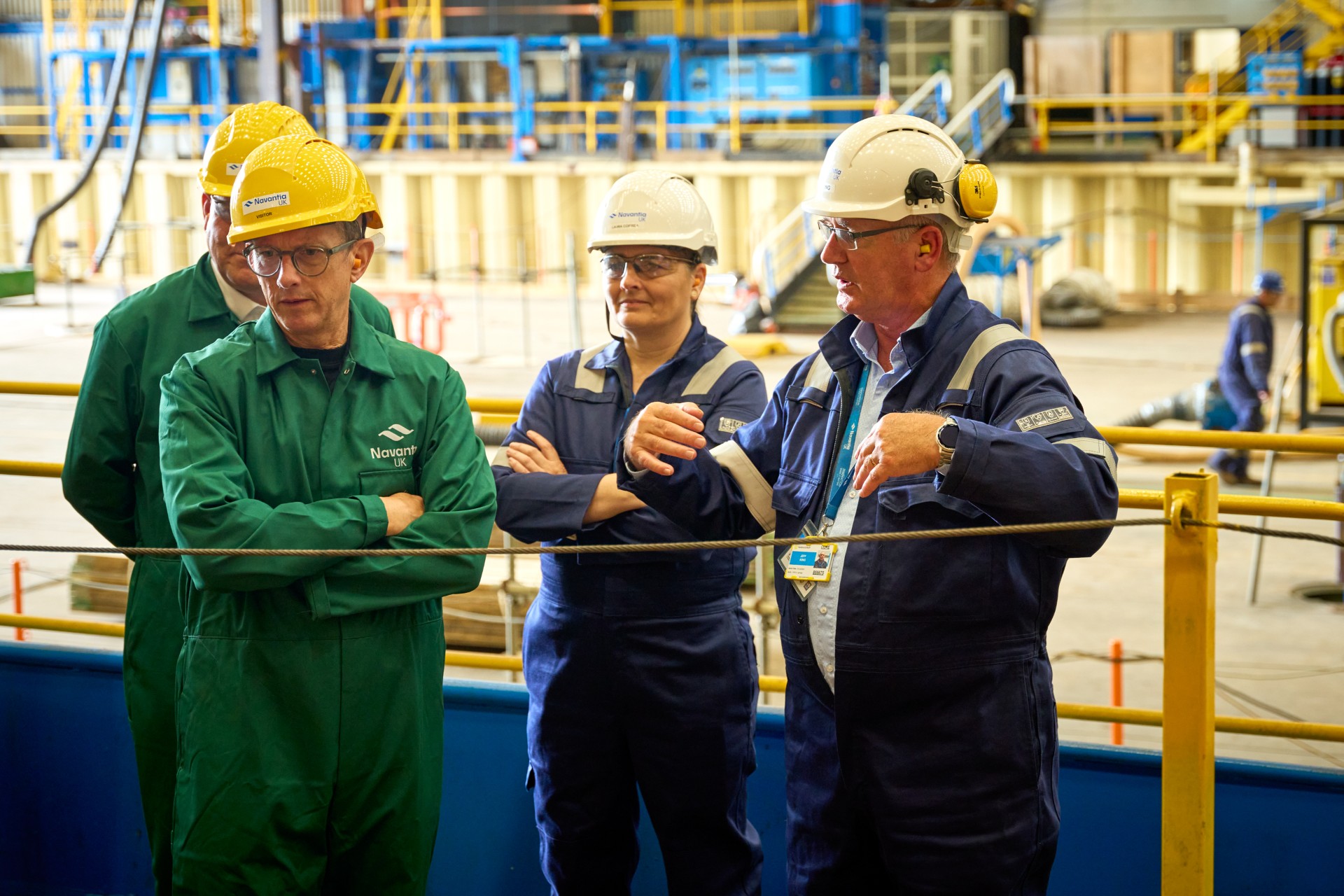
During the visit, Rear Admiral Stratton was briefed on the Fleet Solid Support programme, under which Navantia UK is building three new supply ships for the Royal Fleet Auxiliary. Appledore is constructing the bow sections of all three vessels, with final assembly, systems integration and testing taking place at Navantia UK’s Harland & Wolff shipyard in Belfast. Steel was cut at Appledore for the first FSS vessel in December 2025, marking the formal start of construction.
Rear Admiral Stratton received an update on progress across the programme and viewed recently upgraded facilities, including Appledore’s new Pipe Shop and modern plasma-cutting equipment. The investment forms part of Navantia UK’s £157m investment programme to modernise its four UK yards and rebuild advanced shipbuilding capability across the country.
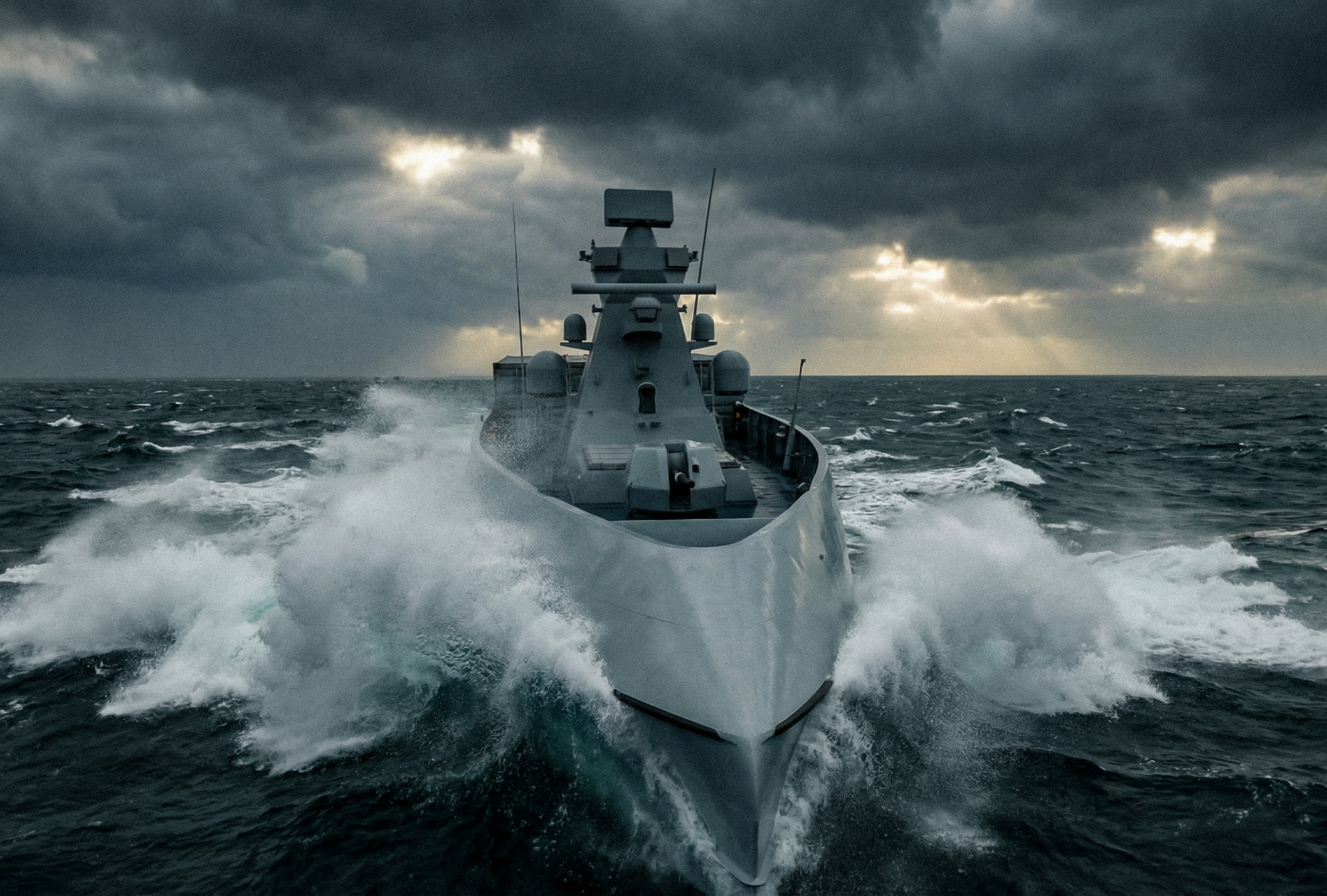
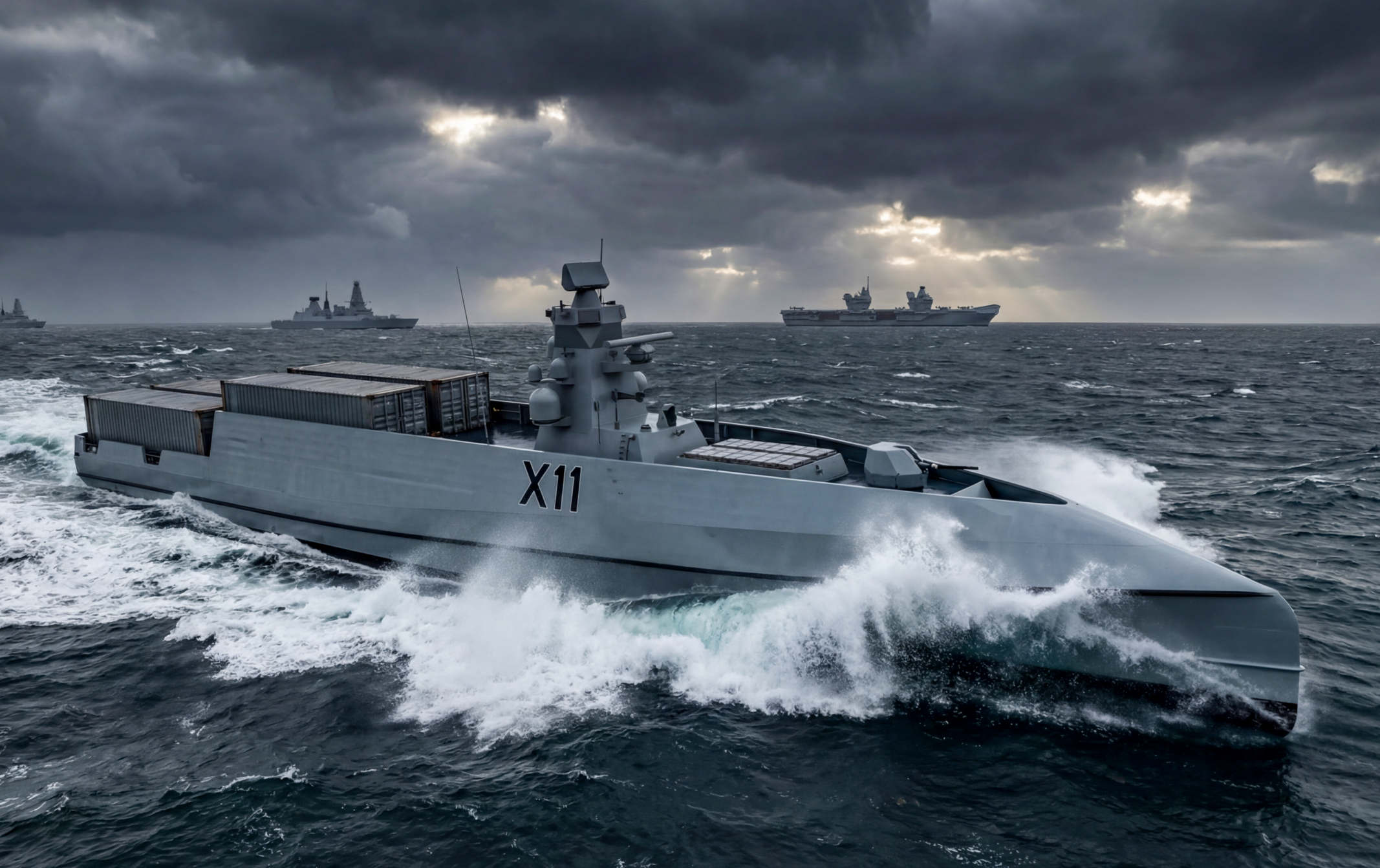
Rear Admiral Stratton was also briefed on how the company’s LASV75 concept has matured since its launch at the Combined Naval Event (CNE), and on Navantia UK’s advanced build strategy for delivering large autonomous vessels at pace and scale in support of the Royal Navy’s hybrid fleet.
Designed from the keel up as an uncrewed platform, the LASV75 combines size, range and speed with a modular, open-architecture design. Since launch, Navantia UK has demonstrated the platform’s modularity, with configurations developed to fit a range of roles within the hybrid navy – including Anti-Air Warfare (AAW), Anti-Submarine Warfare (ASW) and Naval Fires (NF), countering land-based threats – as well as sensing, operational or combined configurations.
As an open-architecture platform, the LASV75 can be easily re-roled, even at sea, allowing a single vessel to switch between missions as operational demands change. This modularity and re-role capability also empowers construction at scale. The vessel has been designed to provide persistent capability while being built at a significantly lower cost than comparable crewed platforms.
Navantia UK has developed a clear route to manufacture for the LASV75, bringing together digital design, modular construction and advanced production methods with the industrial capacity being established across its four UK yards. Appledore is ideally set up to build vessels of this size at pace, with the capacity to construct two vessels concurrently and deliver an output of two units per year.
Donato Martínez, CEO of Navantia UK, said:
“We were delighted to welcome Rear Admiral Stratton to Appledore and to update him on the contribution the yard is making to the Fleet Solid Support programme.
“The work underway here demonstrates how FSS is supporting investment not only in new ships, but also in the people, technology and industrial capability needed to sustain UK shipbuilding over the long term.
“Our immediate priority remains the successful delivery of the three FSS vessels. At the same time, the capabilities we are developing across Appledore, and our wider UK yards will put us in a strong position to support the Royal Navy as it considers the future balance between crewed ships, autonomous platforms and new technologies.”
Rear Admiral Matthew Stratton, Director Naval Acquisition, said:
“It was a real pleasure to visit the Navantia Appledore Shipyard and experience first-hand the capabilities the yard offers and understand the investment in people and equipment that is taking place under Navantia ownership in North Devon.”
On the FSS programme, he said:
“The modernisation of the Navantia UK yards is a critical enabler to the successful delivery of the FSS programme as the UK modernises its RFA Solid Support capabilities in support of Carrier Strike capability. The importance of the FSS programme has been reconfirmed through the DIP and I was delighted to be updated on progress of the programme.”