

Building a sovereign defence industrial capability: what it takes and why it matters
By Derek Jones, Chief Commercial and Business Development Officer, Navantia UK
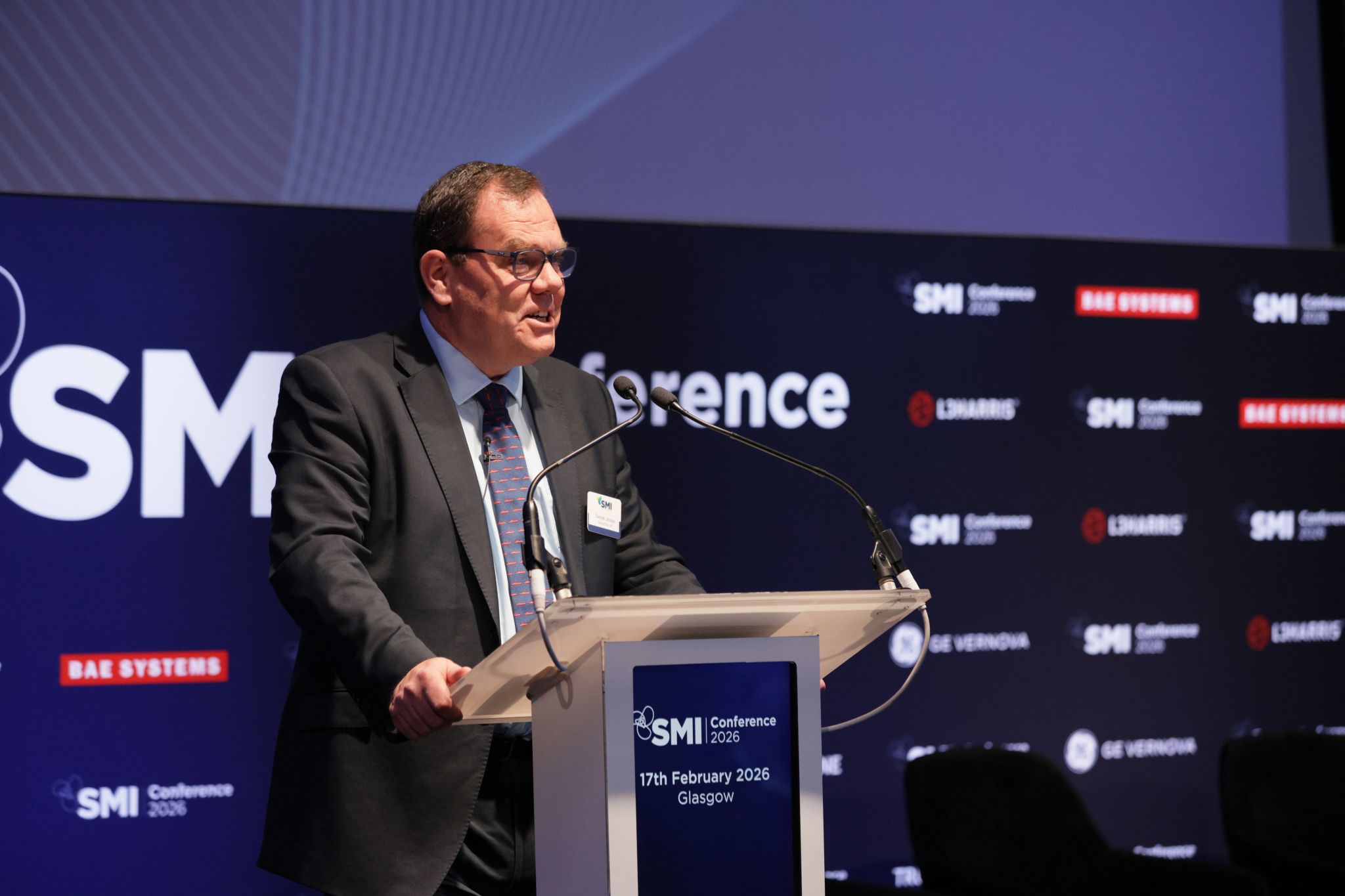
This article is based on a speech delivered by Derek Jones at the SMI Conference in Glasgow on 17 February 2026.
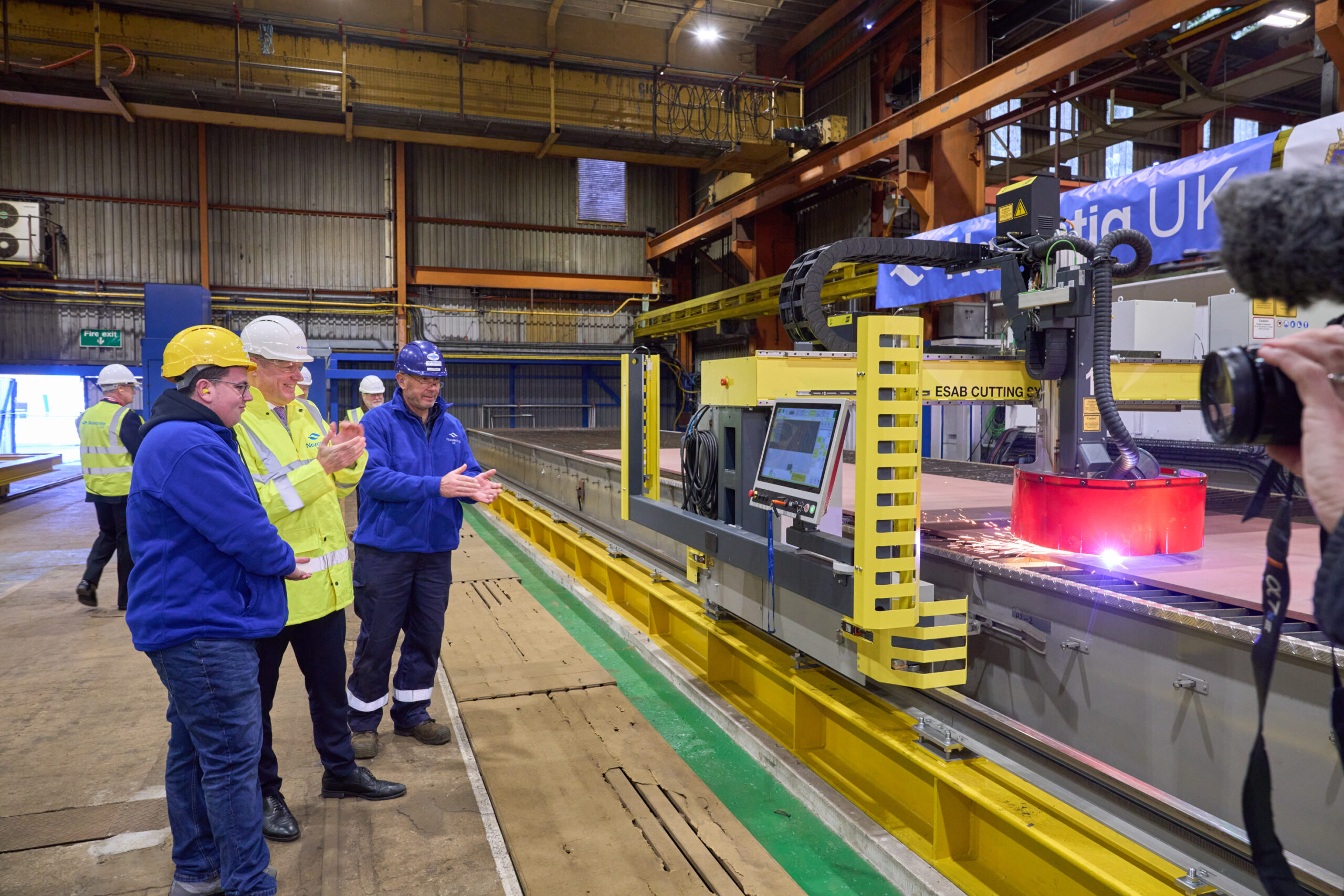
January 2026 marked the one-year anniversary of Navantia’s acquisition of Harland & Wolff, bringing four UK shipyards (Belfast, Appledore, Methil and Arnish) into our group. In that first year, we’ve grown to over 1,100 employees and 222 apprentices, and we’re investing £115 million in modernising our yards. We’ve cut steel on the first Fleet Solid Support ship, RFA Resurgent, at Appledore.
But this isn’t a story about one company or one programme. It’s about what it will take, across government, industry and the workforce, to rebuild the UK’s sovereign defence industrial base.
The context: three decades of decline
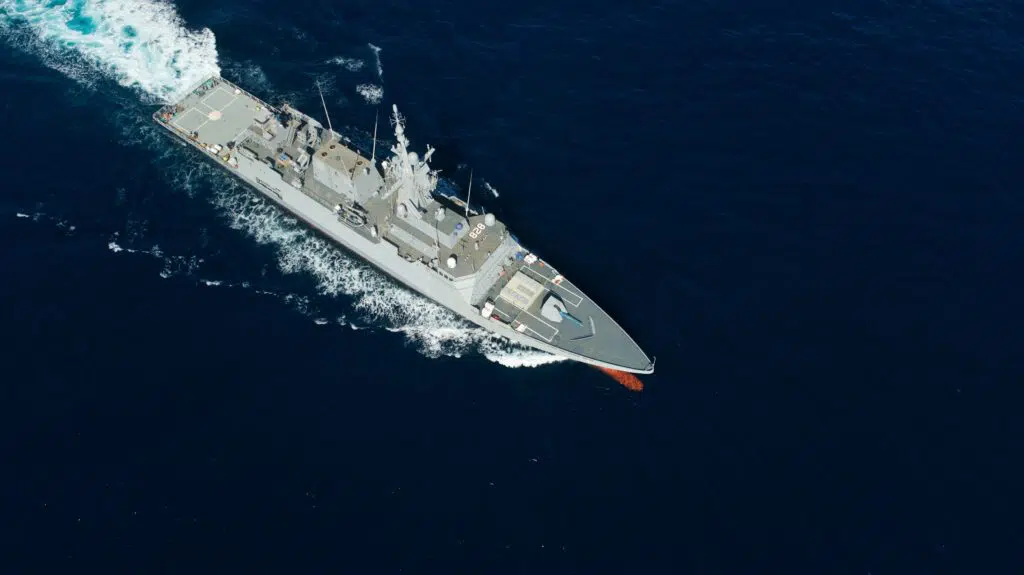
The trajectory is well understood. Since the end of the Cold War, the UK has experienced a sustained reduction in defence spending, successive rounds of force structure cuts, and a steady erosion of industrial capacity. Frigates and destroyers fell from 40 to the low twenties. Yards closed. Skills disappeared. Investment decisions became programme-specific rather than strategic, tied to individual platforms like the Queen Elizabeth-class carriers, Type 26, Type 31 or FSS, rather than sustaining a national shipbuilding capability.
What’s equally clear is that none of the threats we now face were predicted. The rise of Al Qaeda, the wars in Iraq and Syria, the resurgence of Russia, the rise of China, the US’ changing approach to European defence. We’ve moved from a bipolar world of two superpowers to a multipolar landscape of intensifying strategic competition. The phrase “hollowed out” has been applied to our armed forces, but it applies just as readily to the maritime industrial sector that sustains them.
Why industrial capability is a strategic asset
The First Sea Lord has been clear: while we must be ready to fight and win, our primary objective is deterrence. Military capability alone is not enough. A strong sovereign industrial base, one that can build, sustain and scale, is a key component of that deterrence. It signals to adversaries that the UK can not only deploy force today, but regenerate and expand it when required.
That’s why defence is now being positioned as a pilot for reindustrialisation. The ambition set out in the Strategic Defence Review (SDR) and the Defence Industrial Strategy (DIS) is significant. Taken together, they call for a sovereign defence industrial capability that is UK-based and resilient; capable of scaling and surging to meet emerging threats; built on long-term partnerships between government, primes, SMEs and universities; designed for co-development, co-production and co-support with NATO allies; and oriented towards a high-low mix of capabilities with real improvements in productivity, competitiveness and value for money.
This is the defence engine for growth, and it requires both capability and capacity, working hand in hand.
The 5Ps: a framework for delivery
At Navantia UK, we think about this challenge through five connected lenses: Products, Production, Procurement, People and Processes.
Products
The UK has a strong track record in maritime design. Our naval platforms have been innovative, class-leading and successful in the export market. The direction from the SDR and DIS, towards co-design with international partners, moving away from exquisite single-nation solutions at low volume, is the right one. We’ve seen the difficulties other NATO nations have faced pursuing that model.
For Navantia UK, the Fleet Solid Support programme is the anchor. Three ships for the Royal Fleet Auxiliary, the second largest vessels in UK defence after the carriers, designed by BMT, built across UK and Spanish yards, with final assembly in Belfast. FSS delivers operational capability for the Carrier Strike Group and industrial capability for the UK shipbuilding sector. Two sides of the same coin. Beyond FSS, Navantia brings a portfolio of over 40 ships delivered to eight nations and the SMARTShips concept for next-generation combatants, which combined with UK engineering talent creates a strong base for future programmes.
Production
Years of underinvestment during the 1990s and 2000s have left our production infrastructure short of where it needs to be. Recent investment is welcome and the trend is reversing, but we are not yet as resilient as required, nor do we have the capacity to scale or surge as the threat environment demands.
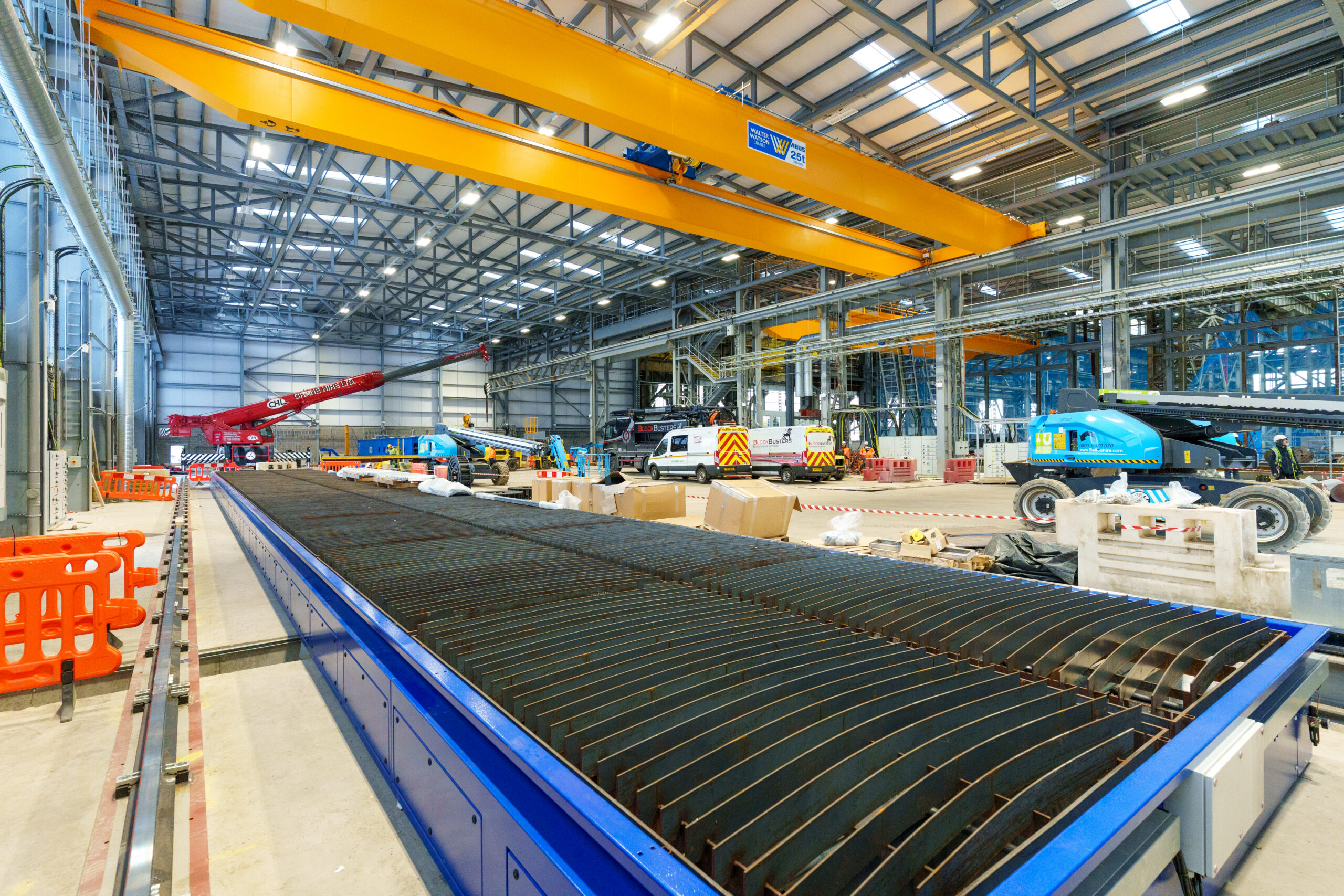
We are putting our money where our mouth is. Of the £115 million we’re investing across four yards, Belfast alone is receiving over £90 million: robotic plasma cutters, a mechanised panel line, automated quality control systems and new cranes. Appledore is getting new plasma cutters, Methil a further £12 million in upgrades, and Arnish a new training centre. These yards won’t just deliver FSS. They’ll be ready for what comes next.
The SDR’s principle that “if we fight together, we should build together” raises an important question about co-production. The air sector has proved this model through Tornado, Eurofighter and the Joint Strike Fighter. In the maritime domain, the critical sovereign requirement is the ability to integrate, assemble, commission and test, and that’s exactly what FSS is demonstrating at Belfast.
Procurement
Supply chain resilience requires deliberate effort. A small number of large programmes over the past decade has led to very narrow supply chains in some areas. We need better clarity on long-term pipelines and a commitment to dual-use technologies.
At Navantia UK, we’ve taken a local-first approach. Through Meet the Buyer events we’ve engaged with over 150 SMEs, and local companies are already delivering on the FSS programme. If we want resilient supply chains, we have to build them on purpose and give small businesses the confidence that the work is there for the long term.
People
The skills gap in UK shipbuilding is real. It’s the legacy of decades without a clear demand signal to justify sustained investment in workforce development. We’re now seeing real effort across industry and government, from Defence Growth Deals to training centres and apprenticeship schemes, and it’s creating genuine career pathways in shipbuilding and the wider maritime sector.
Navantia UK’s 222 apprentices make up 20% of our workforce, and we’ve committed to reaching 500 by 2030. FSS alone will create around 1,200 shipyard jobs and a further 800 across the supply chain. Those people and skills don’t disappear when the last ship delivers. They become the permanent sovereign workforce for follow-on programmes. The question for all of us in industry is whether we could achieve more by working together on early careers and workforce development, rather than each going it alone.
Processes and systems: where power meets control
If we solve the first four Ps (great products, modern production facilities, a strong supply chain, a skilled workforce) we’ll have built a serious maritime engine for growth. But how do we deploy it? How do we deliver on defence’s ask for scaling, surging, and improved productivity?
The answer lies in the fifth P, and it’s the one that has historically received the least investment.
A common thread across shipbuilding programmes has been delays during engineering and production, often rooted in a lack of integrated tools and processes. We’ve seen significant investment in products and production facilities. These are the table stakes. But there hasn’t been enough investment in the engineering tools, production management systems and digital infrastructure that actually drive throughput and efficiency.
Being part of the Navantia group is a real advantage here. Navantia SA has invested heavily in digital shipyard technologies: lifecycle management, 3D design, digital twins, production management systems. We are now transferring that capability into our UK yards through structured knowledge exchange and the installation of digital infrastructure.
The principle is straightforward. Building ships is complex, but it shouldn’t be complicated. We need to be simple businesses that design and manufacture complex products, not complex businesses that design and manufacture complex things. We cannot scale or surge if we can’t do it in a controlled way, deploying people and supply chains in harmony to get the most out of our production facilities. Greater efficiency and productivity create the capacity and headroom for surge.
The Spitfire lesson
Between 1938 and 1948, the UK produced 20,000 Spitfires. Production started at Supermarine’s facilities in Southampton but rapidly expanded to Castle Bromwich, Salisbury, Trowbridge, Reading and subcontractors across the Midlands and South Coast. Ships are different from aircraft, but the mentality of building a single product in a single location cannot be the way forward if we are serious about meeting the threat.
In a modest way, FSS is already proving this model: distributed production across multiple yards, controlled integration, sovereign delivery from Belfast.
A collective effort
No single yard, no single programme and no single company can deliver a sovereign defence industrial base alone. The challenge now is whether we, across industry, government and the workforce, can move from ambition to delivery at the pace the situation demands.
That means investing together in people, in processes and in supply chains. It means being honest about where the gaps are and open about sharing what works. If programmes like FSS can deliver operational capability and industrial capability at the same time, then we have a model. But it only scales if we work together.
The threat is not waiting. Neither should we.