

Apprenticeships

Create your path
An apprenticeship with us is more than a qualification, it’s the start of a career shaped by real responsibility, real projects and real progression. From day one, you’ll be part of a team delivering work that matters across defence, energy and maritime, gaining hands-on experience while earning nationally recognised qualifications.
Navantia UK has been named one of The Sunday Times Top 100 Apprenticeship Employers 2025, recognising the success of our growing apprenticeship programme and the valuable contributions of our apprentices. Here, you’ll learn, earn and build a real career from the very start.
If you’re ready to grow your skills, take on real challenges, and be part of a team that makes an impact, your journey starts here.
Our programme
The apprenticeships offered by Navantia UK are a combination of on-the-job learning and theoretical classroom learning. This format enables our apprentices to gain years of experience and apply their learning as they go, providing a real purpose to their work and yielding tangible results from day one. All working hours are paid and our apprentices attend their college or training provider for additional classroom learning. Upon completing the program, apprentices will have achieved a nationally recognised qualification at level 2 – level 6 (depending on which course you are on). An apprenticeship is group of qualifications that come together to provide a solid learning experience in your chosen career.
Your training
We offer a wide range of apprenticeships across our sites, with most opportunities in engineering and technical trades that support our defence, energy and maritime programmes.
If you join a trade apprenticeship, your first year will usually be at Level 2 and focused on building strong foundations through a combination of classroom learning, college attendance and practical training in our on-site training school. You will be introduced to the main trades and begin building practical skills in health and safety, materials, methods of working, measurement, and the safe use of tools and machinery. By the end of the year, you will be ready to begin working on the yard as part of operational teams, contributing to real projects and building confidence in your skills.
At Level 3, you will spend most of your time in the workplace, with some continued college attendance. This stage is largely portfolio-based, meaning you will complete real tasks on the yard and build evidence of your skills and experience through workplace assessment.
To find out more about current opportunities across our sites and offices, explore our latest apprenticeships or get in touch with our team.
Our opportunities
Electrical
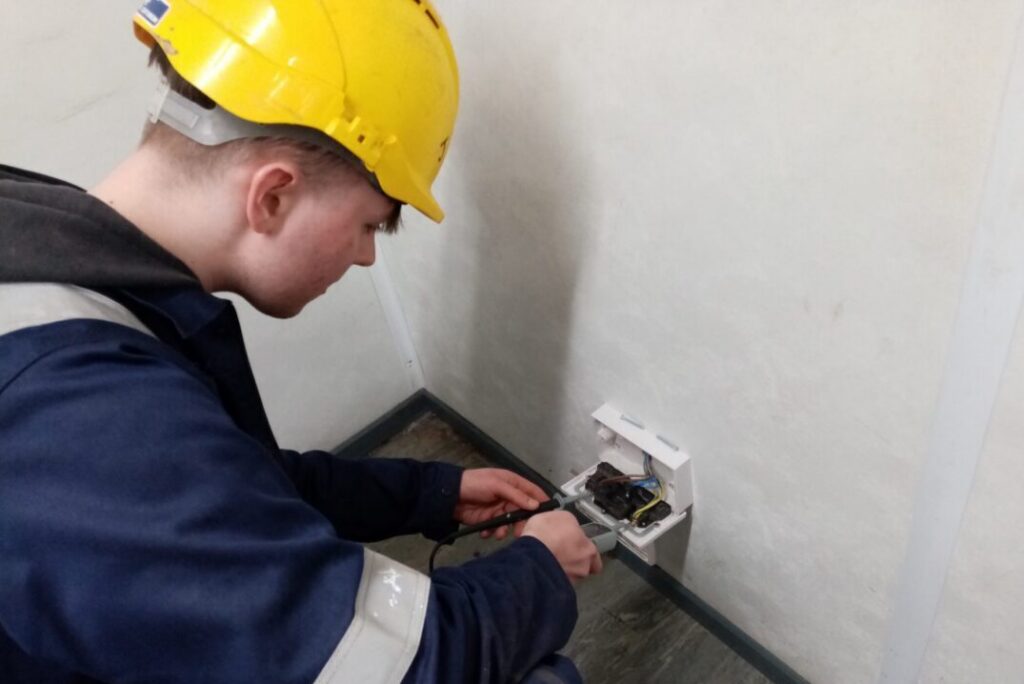
Electricians at Navantia UK work in specialist roles supporting both shipbuilding and site operations.
Maintenance Electricians keep facilities and equipment running safely, including cranes, workshops and offices. Marine Electricians install, test and maintain electrical systems on board ships, including lighting, power and control systems.
Mechanical Maintenance
Mechanical Maintenance Engineers maintain and repair the mechanical systems that keep the yards operating.
This includes servicing heavy plant and vehicles, as well as maintaining cranes, dock gates and other critical infrastructure, using fault-finding and preventative maintenance techniques.
Mechanical Engineering
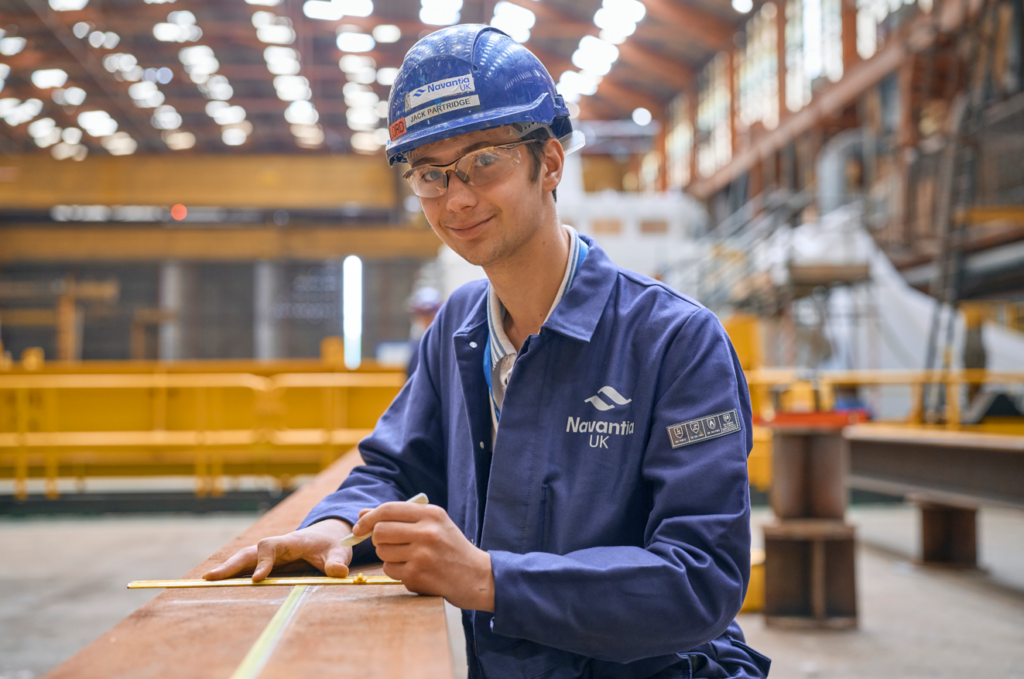
Mechanical Engineers install, maintain and repair mechanical systems on ships and offshore and renewable energy structures.
This includes fitting equipment on new vessels and projects such as wind turbines, and maintaining systems throughout their operational life.
Pipe Fitting
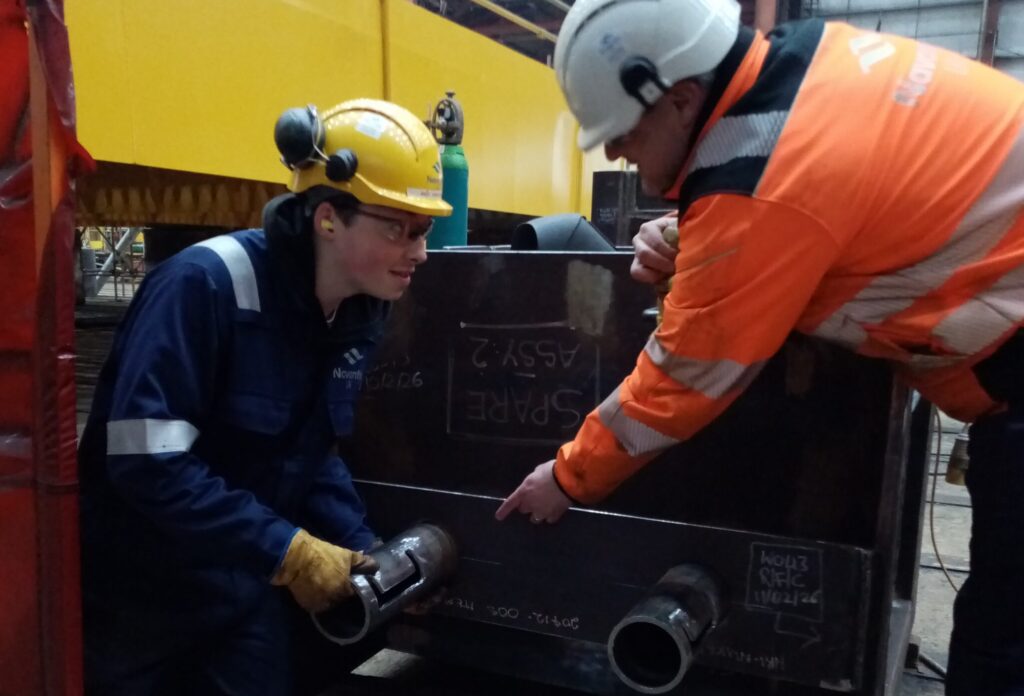
Ships and offshore riggs and renewable energy structures contain pipe systems for water, fuel, fire protection, sewage, ventilation and cooling.
Pipe Fitters install, test and maintain these systems, working from technical drawings to measure, cut and assemble pipework, and carrying out repairs during the life of the vessel or structure.
Fabrication
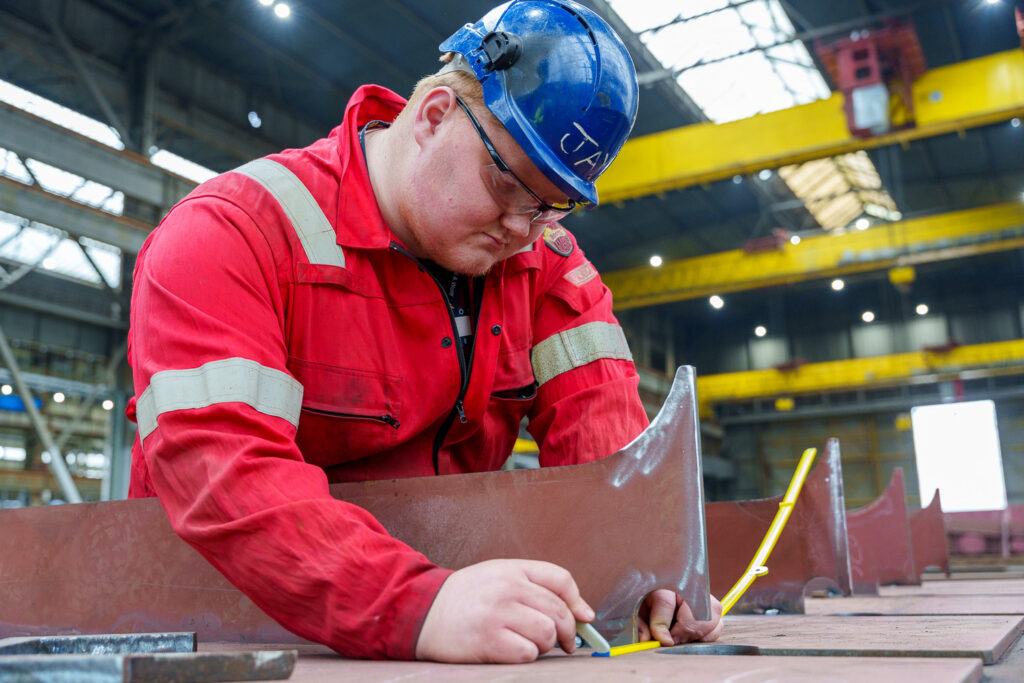
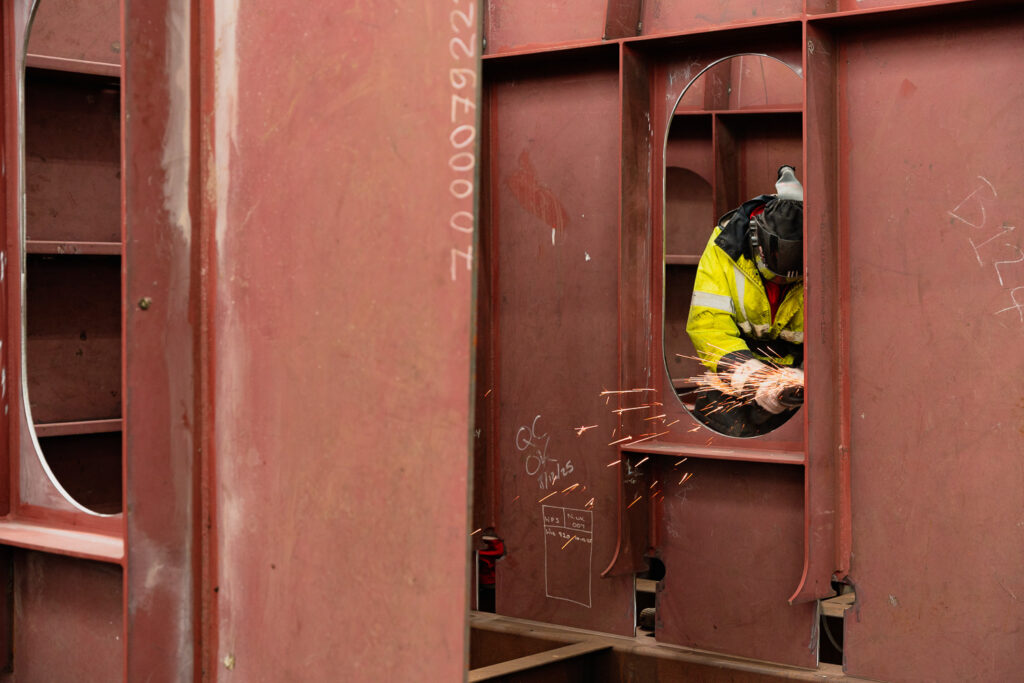
Fabrication involves cutting, shaping and forming metal, mainly steel, into components used in ship and offshore structure construction.
Fabricators work from engineering drawings to mark out, cut, bend and shape steel using specialist tools and machinery, preparing parts for assembly and welding.
Welding
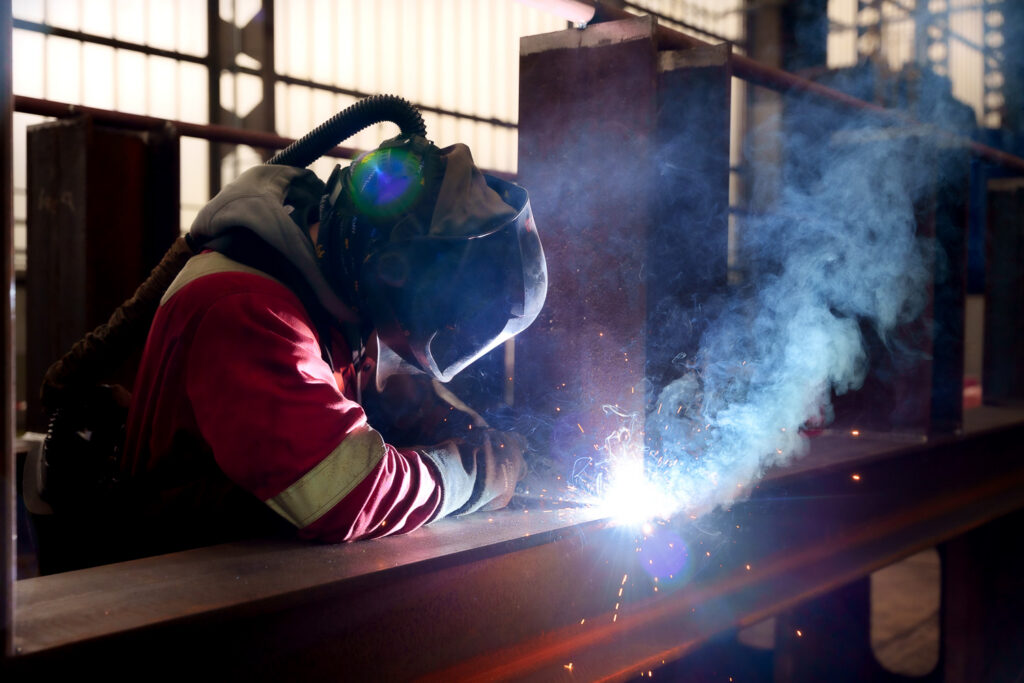
Welders join metal components using specialist welding equipment to create strong, high-quality joints that meet safety and quality standards.
Working from approved welding procedures, welders bond components produced by Fabricators and Pipe Fitters and inspect weld quality as part of the process.
Technical Computer Aided Design
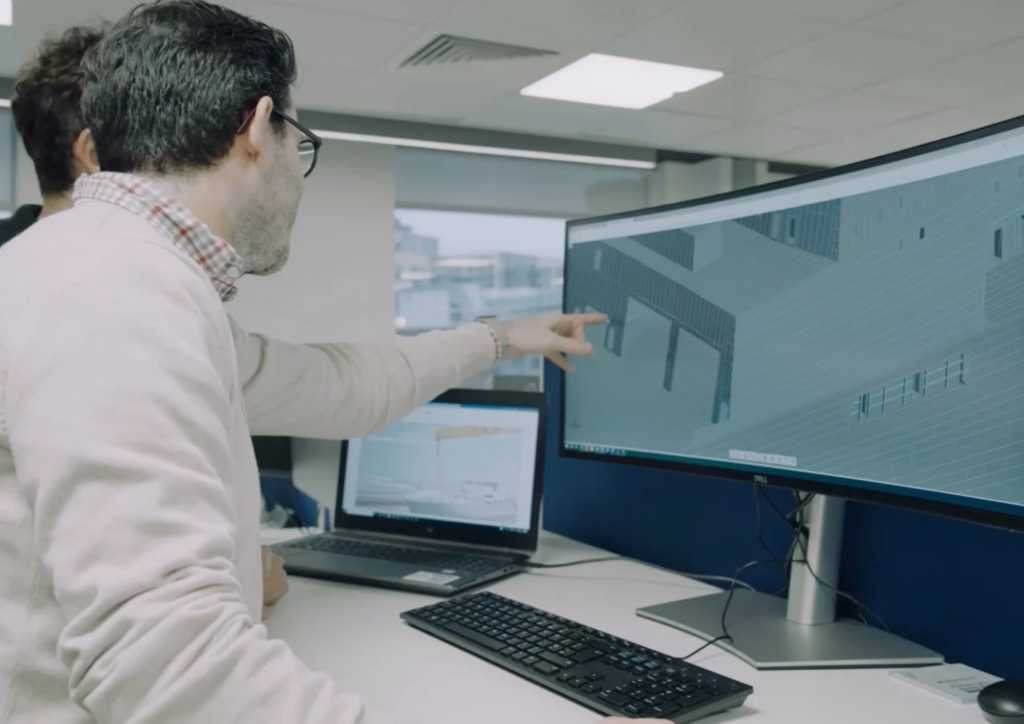
This apprenticeship focuses on developing the skills needed to design and plan structures using computer aided design software.
Apprentices are usually based in design or planning offices, producing technical drawings and models that support production teams, with time also spent on the yard to understand how designs are manufactured and assembled.
Higher Level Apprenticeships
Higher Level Apprenticeships are available across a range of professional and technical disciplines, including engineering, digital, manufacturing and business support roles.
These apprenticeships range from Level 4 (HNC) to Level 7 (Master’s degree equivalent), allowing apprentices to gain higher qualifications while continuing to build workplace experience.