

Persistence determines maritime advantage
By Simon Jones, Design and Product Development Director, Navantia UK
Naval strength is usually measured in platforms and their capabilities. The harder measure, and the one that increasingly decides outcomes at sea, is whether a navy can be present where and when it is needed.
Allied navies share a common challenge. Fleets have reduced in size, the ships that remain are not always available, and crewing them is a constant pressure. Where presence reduces, others take advantage. An adversary does not need to overcome a capability that is absent.
Much of what a modern state depends on runs across or beneath the sea: the cables that carry its data, the pipelines that carry its energy, the shipping that carries its trade and critical supplies. These are well suited to grey-zone and asymmetric activity, pursued below the threshold that would prompt a conventional response. Securing the North Atlantic against this kind of pressure, which the Royal Navy describes through its Atlantic Bastion concept, is not achieved by a single high-end platform. It depends on coverage sustained over time – persistence.
The 2025 Strategic Defence Review called for a fleet that is more powerful, more survivable, of greater mass but also quicker to field, upgradeable and cheaper . Drawn from a hybrid mix of crewed, uncrewed and increasingly autonomous vessels, with autonomous platforms expected to operate across the North Atlantic and further afield. Behind that wording is a judgement about persistence: presence at the scale now required cannot be met if every hull carries the cost and the crew of a frigate.
This is where uncrewed vessels earn their place. A vessel designed without a crew can be available for more of the time, and affordable in the numbers that distributed presence demands.
Availability is the first reason. Across the surface fleet, the lower complexity vessels tend to spend more of the year at sea than the most complex ones. A vessel designed from the outset to operate without a crew can build on that. Removing the crew removes a long list of constraints that shape a crewed warship: the accommodation and the systems that support a ship’s company, the damage-control margins built around people, and the watch-keeping limits that cap how long a crewed platform can remain on task. What remains can be arranged around mission capability, endurance and reliability.
Affordability follows the same logic. Distributed presence is a question of numbers, and numbers depend on the cost of each hull. Disaggregating sensing, decision-making and effect across a task group, rather than concentrating them in a few high-value units, is
only possible if the individual platforms are affordable enough to field in quantity. The survivability of a hybrid force comes from that distribution.
only possible if the individual platforms are affordable enough to field in quantity. The survivability of a hybrid force comes from that distribution.
None of this replaces the crewed fleet. A task group still needs its command ships, and there are tasks that will always require people at sea. The role of an autonomous vessel is to perform the persistent, repetitive and potentially dangerous work of being present, and in doing so to free crewed platforms for what only they can do.
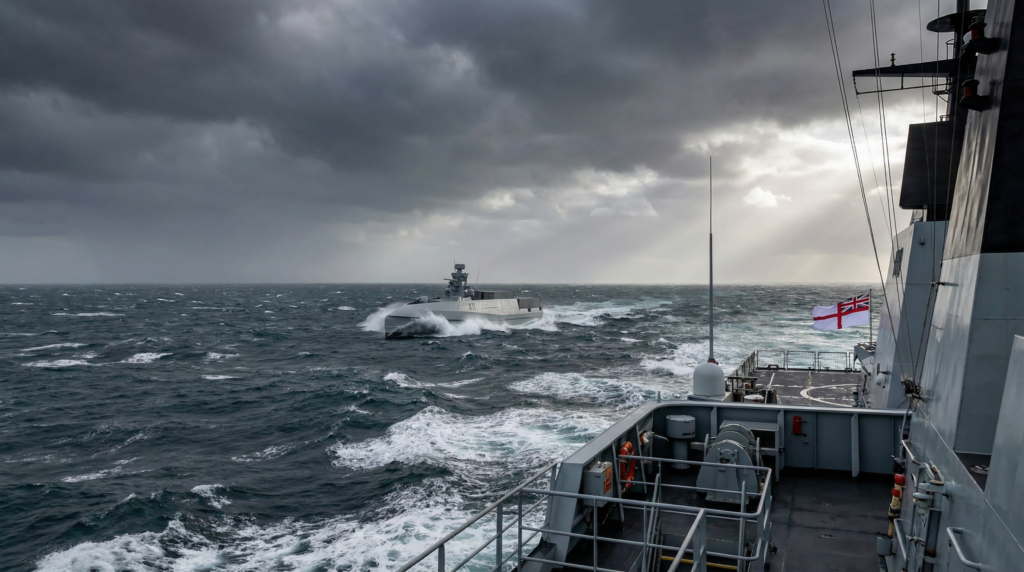
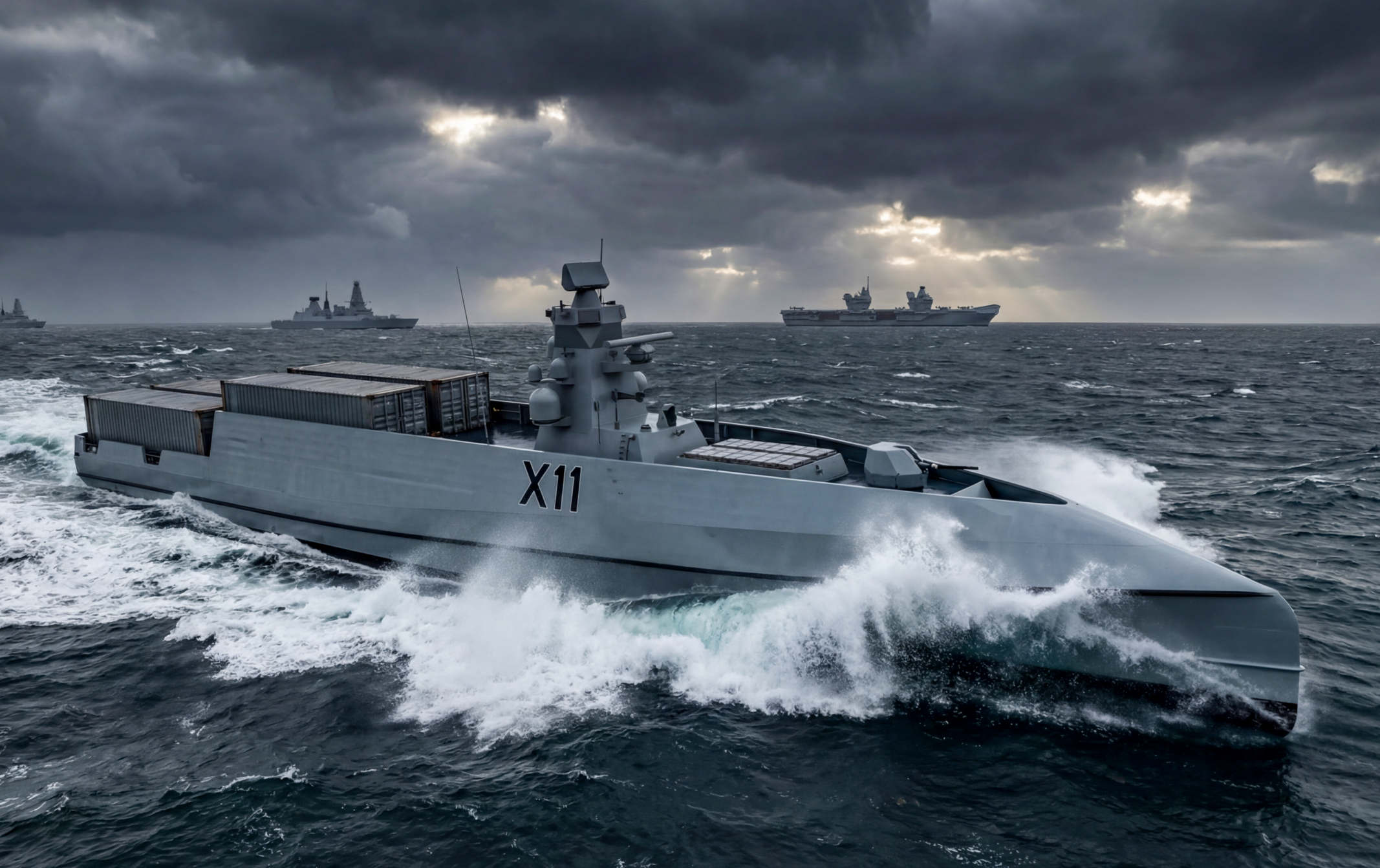
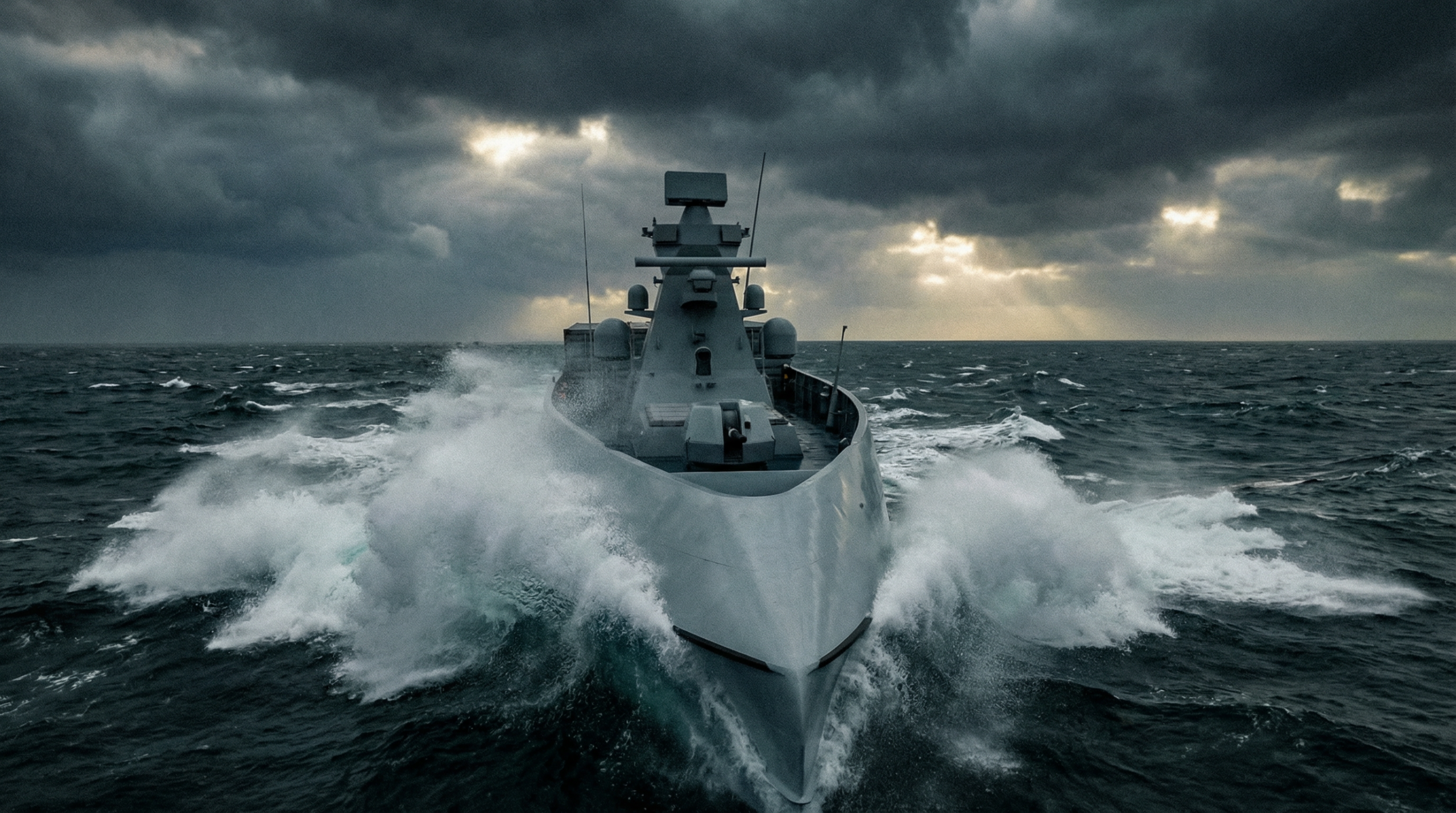
Persistence of this kind must be engineered. A vessel intended to remain at sea, uncrewed, in demanding conditions, must be designed for reliability and for safe, graceful degradation from the keel up, with its platform systems, autonomy, communications and support arrangements all built to keep it on station. This is the principle behind the LASV75: a 75-metre vessel configured from the outset to operate without a crew, sized to carry meaningful capability and to sustain it over long periods in harsh sea conditions.
The questions that follow from that design choice—why size matters, how a vessel with no one aboard is assured, how it is built affordably and accepted into service—are the subject of the insights that follow. Each rests on the same starting point. Maritime advantage increasingly belongs to the navy that can be there and stay there.